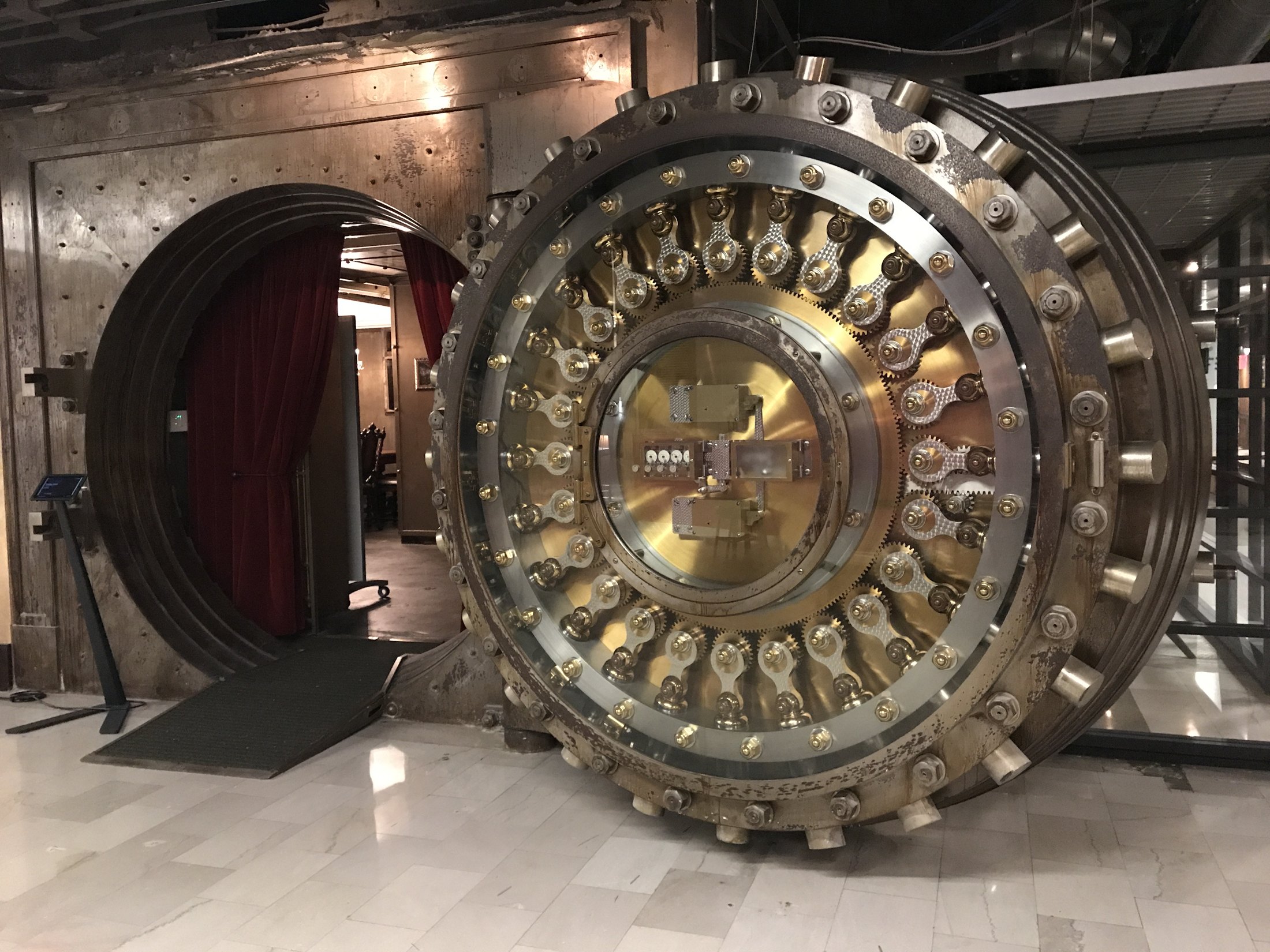
The vault door is nine feet of steel and brass, and it has not closed in years.
I took this photo in Detroit in 2017. Someone had propped it open with a little metal ramp, the kind you would wheel a hand truck over, and behind the door there was a red curtain and a room where people were eating dinner. A bank built that door to keep the world out. Somebody set the combination, spun the wheel, trusted their money to it. By the time I stood in front of it, the world just walked through. Nobody guarding it. Nobody bidding you off. A curtain and a table and the smell of somebody’s food.
That contradiction is what stuck to me about Detroit and never came off.
I moved there for a job at a company that did not exist yet, not really. StockX was employee-number-single-digits small when I got there. I was number nine. That is not a resume line, it is a room. A room where nobody has a playbook, where the person who cleans up the mess and the person who caused the mess are the same person, where you learn what you are actually capable of because there is nobody else to hand it to. You either figure it out that afternoon or it does not get figured out. I loved it in a way I have never loved a comfortable job.
Detroit taught me the same lesson the vault door did. The city had been written off. For most of my life, if you said Detroit to somebody who had never been, they pictured empty factories and grass growing through the cracks. And a lot of that was real. You could drive four blocks from something brand new and beautiful and hit a building with trees growing out of the fifth floor. But that was never the whole picture, and the people who lived there knew it. The bones were good. Somebody just had to believe the bones were worth building on again.
That is what I keep coming back to. Detroit was not empty. It was full of things people had walked away from. Grand buildings, good work, whole neighborhoods that had held real lives. Nothing there was worthless. It had just been forgotten, and forgotten is not the same as gone.
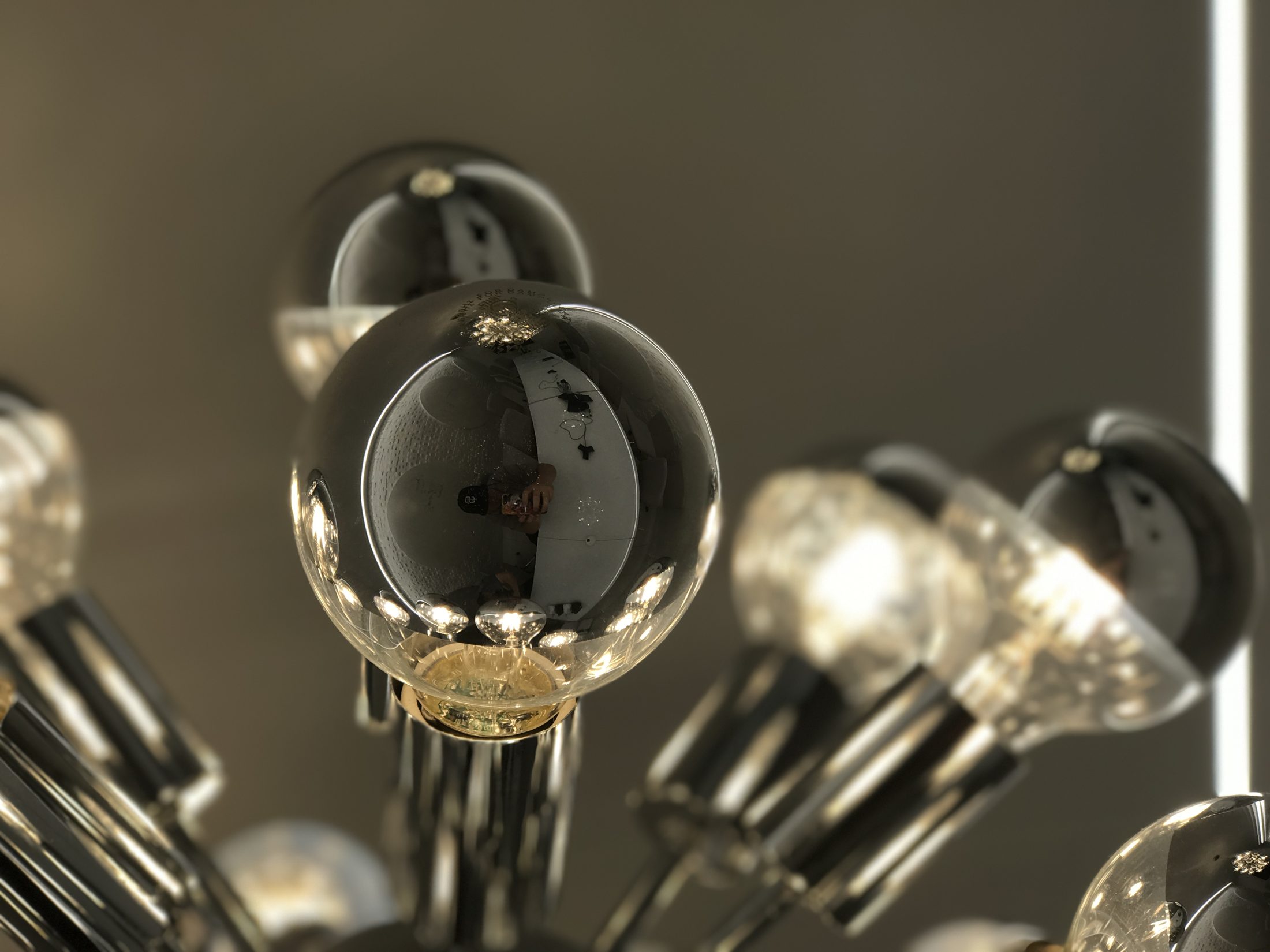
You could feel that everywhere in the building the vault lived in. It was old money architecture that somebody had refused to let die. I remember standing under a light fixture in there, a cluster of chrome mirror-ball bulbs on chrome stems, and catching my own reflection wrapped around one of them, phone up, taking the picture. Fifty years of taste bent into a curved little mirror the size of a grapefruit. Whoever restored that room did not chase every old thing out to make it feel new. They kept the parts worth keeping and let them sit next to the new parts, and the friction between the two was the whole point. That is a very Detroit way to build. Honor what was here. Do not pretend it never happened.
The partner in crime
You do not do the small-company thing alone. You cannot. And somewhere in those early Detroit days I found the person who would become my partner in crime, the one you text at eleven at night with a stupid idea that turns out to not be stupid, the one who pushes back hard enough that the good ideas survive and the bad ones die quietly before they cost anybody anything.
I am not going to turn this into a highlight reel about the two of us, because that is not the point and they would hate it. The point is that the best parts of that chapter were never the product or the metrics. They were the people. The nights that ran long because nobody wanted to leave. The problems that felt impossible at four in the afternoon and obvious by seven. That is the part of building something that nobody puts in the deck, and it is the only part I would not trade.
I think that is why the vault stays in my head. Not because of the steel. Because of what people chose to do with it. They could have torn it out. It would have been easier to gut the building and start clean. Instead somebody looked at this beautiful, obsolete, forgotten machine and decided it was worth keeping. They cleaned it up, they lit it, they built a room around it, and they invited people in to sit next to it and eat. They took the thing that used to lock people out and turned it into the reason people showed up.
Reasonable Doubt and the first IPO
In 2016, while I was there, StockX did something that had nothing to do with sneakers and everything to do with the same idea.
The company partnered with Kareem “Biggs” Burke, the Roc-A-Fella co-founder, to run what was billed as the first consumer-goods IPO. It was built around the twentieth anniversary of Jay-Z’s Reasonable Doubt, the 1996 debut that started the whole Roc-A-Fella tree. Merch dropped on the exchange the way a stock would, pre-bidding and an IPO date and a resale market after. I still have the cassette from it. Twenty-year anniversary, parental advisory sticker and all, sitting in a case that has never seen a tape deck.
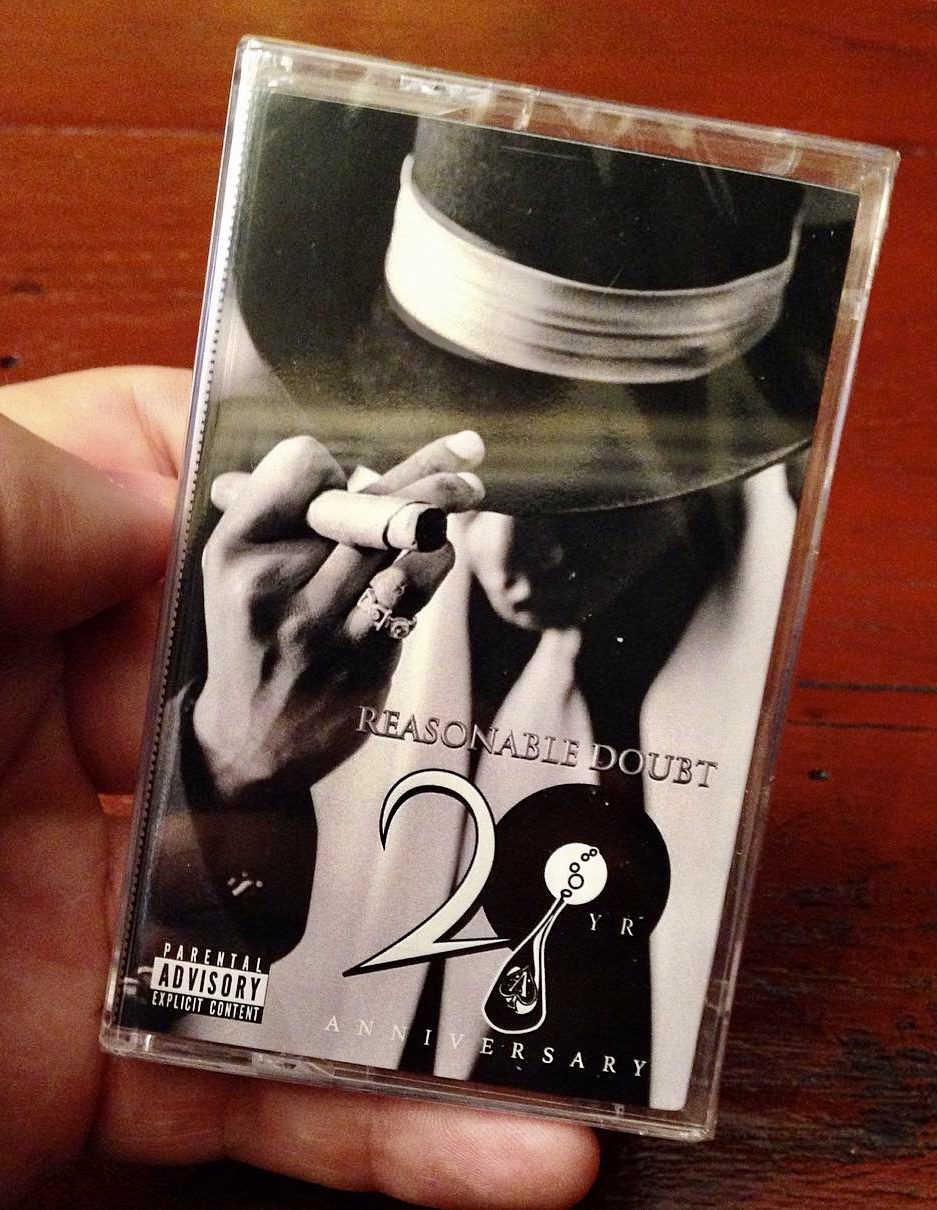
Think about what that album was when it came out. A debut. Unproven. The kind of thing that could have disappeared. Twenty years later it is treated like a cornerstone, and the people who were there at the start get talked about like they always knew. They did not always know. Nobody knows at the start. They just believed the thing was worth making and they made it, and time did the rest.
I am writing this now because Reasonable Doubt found its way back into my feed this week, Jay-Z putting it back in front of everyone, and the second I saw it, I was standing back in front of that vault door in my head. The album, the vault, the city, the tiny company, the partner across the table at midnight. Different objects. Same idea running underneath all of them.
The idea is this. The value was always there. It just needed somebody to stop treating it like it was over.
What I have been keeping
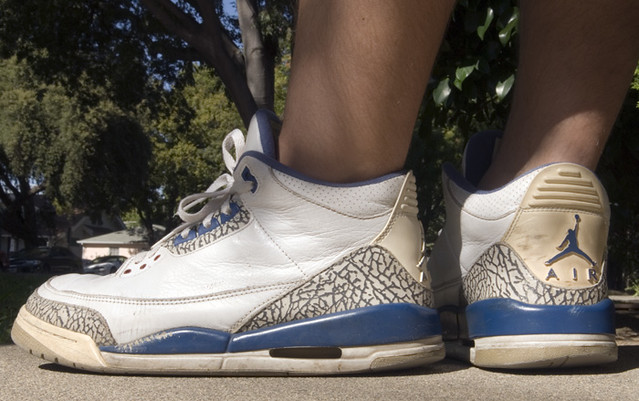
I have spent more than twenty years around sneakers and cars and the culture that grows up around both. Along the way I have collected things. Some of them are worth real money. Most of them are worth something you cannot put an ask on. A shoe that was in the room for a moment that mattered. A piece somebody made by hand who nobody will ever hear of. A cassette from a company that did not exist and then did.
For a long time those things lived where collections usually live. In boxes. On shelves I walk past. In a spot only I ever see. And I have started to feel about that the way I felt standing in front of a bank vault that somebody had decided to open. What is the point of a beautiful thing behind a locked door? Who is it for, if it is only ever for me?
A collection that only one person sees is just storage. It is a nicer word for the same forgotten room.
The stuff was never really the point anyway. The point was always the moment attached to it. Where I was when I got it. Who handed it to me. The night that a pair of shoes came home from, or the person who sold me the last one they had and told me the story before they let it go. When I keep those things to myself, the object survives and the story dies with me. That is the part I cannot make peace with. The shoe outlasts the reason it mattered, and eventually somebody finds it in a box and sees only a shoe.
So this part of the Pursuit project is me doing with my own shelves what Detroit did with that vault. Not tearing it out. Not selling it off and starting clean. Opening it. Putting the pieces where people can stand next to them. Telling the stories that came with them, because the stories are the actual asset, and letting other people take a piece home and start their own next chapter with it.
The vault in the photo is in Detroit and I am in Monterey, so I cannot bring you that exact door. What I can bring is the reason it stopped me cold in 2017 and still does. The best thing you can do with something worth keeping is not to keep it quiet. It is to open it up and let it mean something to more than one person.
The door has been open this whole time. I am just finally walking people through it.